Aloe vera in a delicate arrangement
- and we'll find out the delivery cost
- You will get 330 bonuses
Watering frequency
2 times month
Size
- Width - 20 cm
- Height - 25 cm
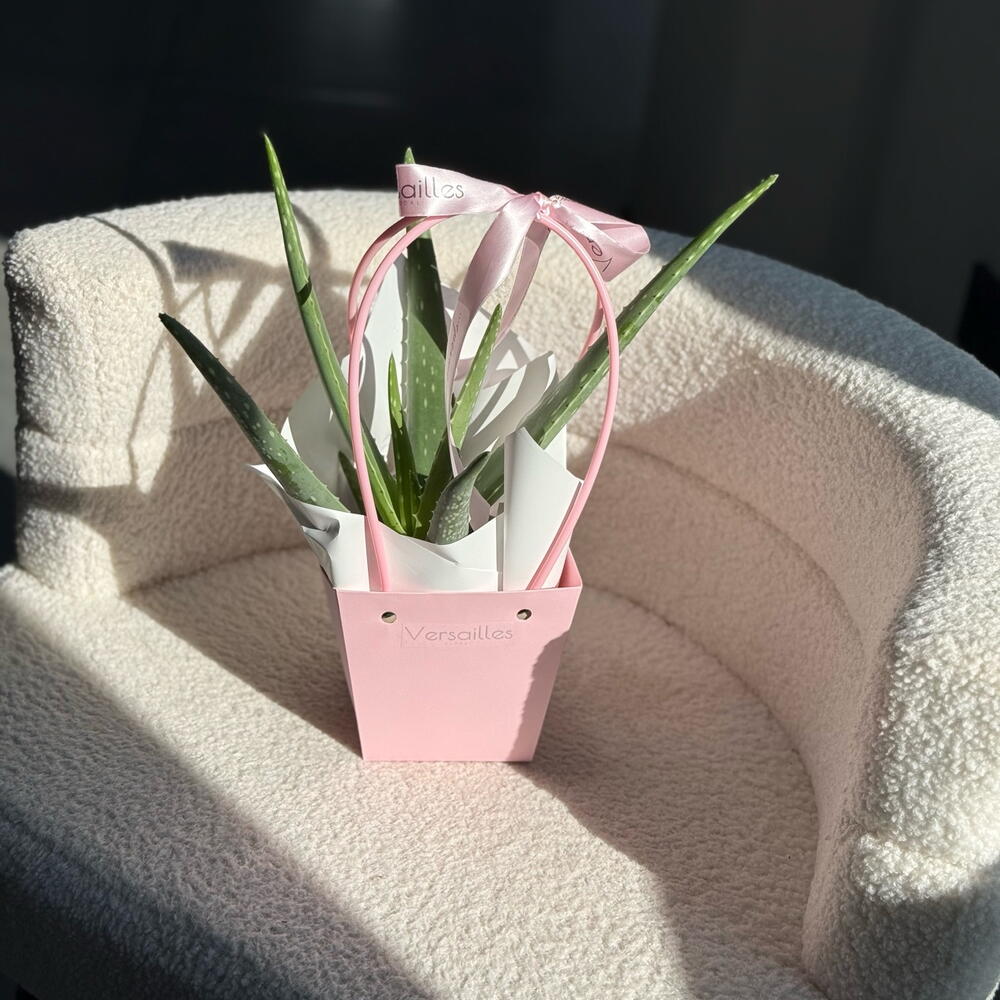
Aloe vera is one of the most reliable air purifiers. This houseplant releases oxygen even at night, thereby reducing stress levels. Moreover, aloe vera extract is included in medicinal products, ointments, and gels, and the plant is also widely used in cosmetology.
Care Guide
For caring for aloe vera at home, moderate watering (when the soil dries out), good lighting without direct sunlight, and a cool place in winter are important. Ensure well-draining soil, fertilize the plant from spring to autumn no more than once a month, and regularly inspect for pests. Watering and humidity Watering: Water only after the top layer of soil has completely dried. In summer, watering can be once every 1–3 weeks, and in winter — even less often, especially if the plant is kept in a cool place. Water: Use water that has been left to stand at room temperature. Avoid: Do not allow water to get into the leaf rosette, as this can cause rot. Spraying: Not required, but you can wipe the leaves with a damp cloth to remove dust. Lighting and temperature Lighting: Aloe likes light, but direct sunlight can cause burns. Bright, diffused light is best. Artificial lighting may be needed in winter. Temperature: Optimal temperature in spring and summer is 18–25°C. In winter, move the plant to a cooler place (10–16°C). Fertilizer Feeding: Apply balanced fertilizers for succulents from spring to autumn no more than once a month. Do not fertilize in winter. Other Pests: Regularly inspect the plant for scale, spider mites, and aphids. If detected, treat with a soapy solution or appropriate products. Pruning: Remove dried or damaged leaves, and also young shoots if they are draining the mother plant.
Aloe vera is one of the most reliable air purifiers. This houseplant releases oxygen even at night, thereby reducing stress levels. Moreover, aloe vera extract is included in medicinal products, ointments, and gels, and the plant is also widely used in cosmetology.
Care Guide
For caring for aloe vera at home, moderate watering (when the soil dries out), good lighting without direct sunlight, and a cool place in winter are important. Ensure well-draining soil, fertilize the plant from spring to autumn no more than once a month, and regularly inspect for pests. Watering and humidity Watering: Water only after the top layer of soil has completely dried. In summer, watering can be once every 1–3 weeks, and in winter — even less often, especially if the plant is kept in a cool place. Water: Use water that has been left to stand at room temperature. Avoid: Do not allow water to get into the leaf rosette, as this can cause rot. Spraying: Not required, but you can wipe the leaves with a damp cloth to remove dust. Lighting and temperature Lighting: Aloe likes light, but direct sunlight can cause burns. Bright, diffused light is best. Artificial lighting may be needed in winter. Temperature: Optimal temperature in spring and summer is 18–25°C. In winter, move the plant to a cooler place (10–16°C). Fertilizer Feeding: Apply balanced fertilizers for succulents from spring to autumn no more than once a month. Do not fertilize in winter. Other Pests: Regularly inspect the plant for scale, spider mites, and aphids. If detected, treat with a soapy solution or appropriate products. Pruning: Remove dried or damaged leaves, and also young shoots if they are draining the mother plant.
Part of the text on this page was translated automatically
Ratings and reviews
Sender
January 2026
Sender
January 2026
Sender
December 2025
Спасибо большое! Букет красивый! Доставили вовремя!
Translate to English
Sender
December 2025
Sender
December 2025
Report Item
Other items of this shop